19 Travel Packing Mistakes That Cost You Time and Money
I’ve made every mistake on this list at some point, usually the hard way, standing in an airport realizing I’d overpacked, or digging through a suitcase at a hotel trying to find something I knew I’d packed but couldn’t locate. Packing feels like it should be simple, and in theory it is, but there’s a specific set of mistakes that quietly cost people real time and real money on nearly every trip.
None of these are complicated to fix once you know about them. They’re just the kind of thing nobody tells you until you’ve already paid the price, whether that’s a checked bag fee, a wasted morning searching for something, or an outfit you never actually wore. Here are 19 worth fixing before your next trip.
19. Overpacking “Just in Case” Items
The single most common mistake I see, and one I’ve made plenty of times myself, is packing for every conceivable scenario rather than the trip you’re actually taking. Most “just in case” items never get used, and they add weight, take up space, and increase the odds of checked bag fees or an overstuffed carry-on.
Before packing something, ask honestly whether you’ll actually use it on this specific trip, not whether it’s theoretically possible you might need it. Most trips need far less than people initially pack.
18. Not Checking Baggage Fees Before Booking
Baggage fees vary enormously between airlines, and booking based purely on ticket price without checking what checked or even carry-on bags will cost can mean the “cheaper” flight ends up more expensive once fees are added. This is especially true with budget airlines, where baggage fees sometimes rival the cost of the ticket itself.
Check the full baggage policy before booking, not after, and factor that cost into your actual comparison between flight options. A slightly pricier ticket with generous baggage allowances sometimes ends up cheaper overall.
17. Packing Liquids in a Way That Guarantees a TSA Delay
Not organizing liquids properly for security screening is one of the most common reasons for a slower, more frustrating airport experience. This is easy to fix but easy to forget until you’re standing in line watching everyone else move faster.
Keep liquids in a clear, easily accessible bag near the top of your carry-on, not buried under other items. This small habit alone saves real time at nearly every security checkpoint.
16. Not Weighing Your Bag Before Leaving Home
Discovering a bag is over the weight limit at the airport check-in counter is a stressful, often costly surprise that a simple home scale check would have prevented entirely. Overweight bag fees can be significant, sometimes more than the original checked bag fee itself.
A cheap luggage scale, or even a regular bathroom scale used creatively, takes the guesswork out of this before you ever leave for the airport. This is one of the simplest fixes on this entire list relative to how much stress and cost it prevents.
15. Packing Valuables in a Checked Bag
Checked bags occasionally get lost, delayed, or damaged, and packing genuinely valuable or irreplaceable items in a checked bag adds unnecessary risk that’s easy to avoid. This includes things like important documents, expensive electronics, or sentimental items.
Keep anything important or valuable in your carry-on, where you maintain direct control over it throughout the trip. This is a simple habit that removes a real, if uncommon, risk from the equation entirely.
14. Not Leaving Room for Souvenirs or Purchases
Packing a suitcase completely full on the way out often means struggling to fit anything acquired during the trip on the way home, sometimes resulting in an unplanned second bag fee or having to leave things behind. This is especially relevant on trips where shopping or souvenirs are part of the plan.
Leave some deliberate space, or pack a compressible empty bag, specifically for the return trip if you expect to acquire anything along the way. A little planning here avoids a frustrating situation at the airport on the way home.
13. Packing Shoes That Take Up More Space Than They’re Worth
Shoes are often one of the bulkiest items in a suitcase relative to how much use they actually get, and packing multiple pairs “to be safe” eats into space that could go toward more versatile items. Most trips need fewer shoe options than people initially pack.
Stick to a couple of versatile pairs that work across multiple planned activities rather than a specific pair for every scenario. Wearing your bulkiest pair of shoes on the plane, rather than packing them, is a simple trick that frees up real suitcase space.
12. Not Checking the Destination’s Specific Weather
Packing based on a general assumption about a destination’s climate, rather than the actual forecast for your specific travel dates, sometimes results in being considerably under or overprepared for actual conditions. Climate assumptions based on a region’s general reputation don’t always match what’s actually happening during your specific visit.
Check an actual forecast closer to departure, and adjust your packing list accordingly rather than relying purely on general destination assumptions. This is especially important for destinations with more variable or seasonal weather patterns.
11. Forgetting to Check Electrical Outlet Compatibility
Arriving at an international destination only to discover your electronics don’t fit the local outlets, or that your devices aren’t compatible with the local voltage, is a common and avoidable mistake. This is especially relevant for destinations outside your home region.
Research the specific outlet type and voltage for your destination before the trip, and pack an appropriate adapter or converter as needed. This is a small, inexpensive item that prevents a frustrating situation on arrival.
10. Packing Too Many Backup Chargers and Cables
While one backup charging option is reasonable, packing multiple redundant chargers and cables for the same devices adds unnecessary weight and clutter. This is a specific version of the broader “just in case” overpacking mistake.
One reliable backup per device category is usually sufficient for most trips. A single multi-port charger often covers several devices at once, reducing the total number of items needed.
9. Not Rolling or Properly Organizing Clothes
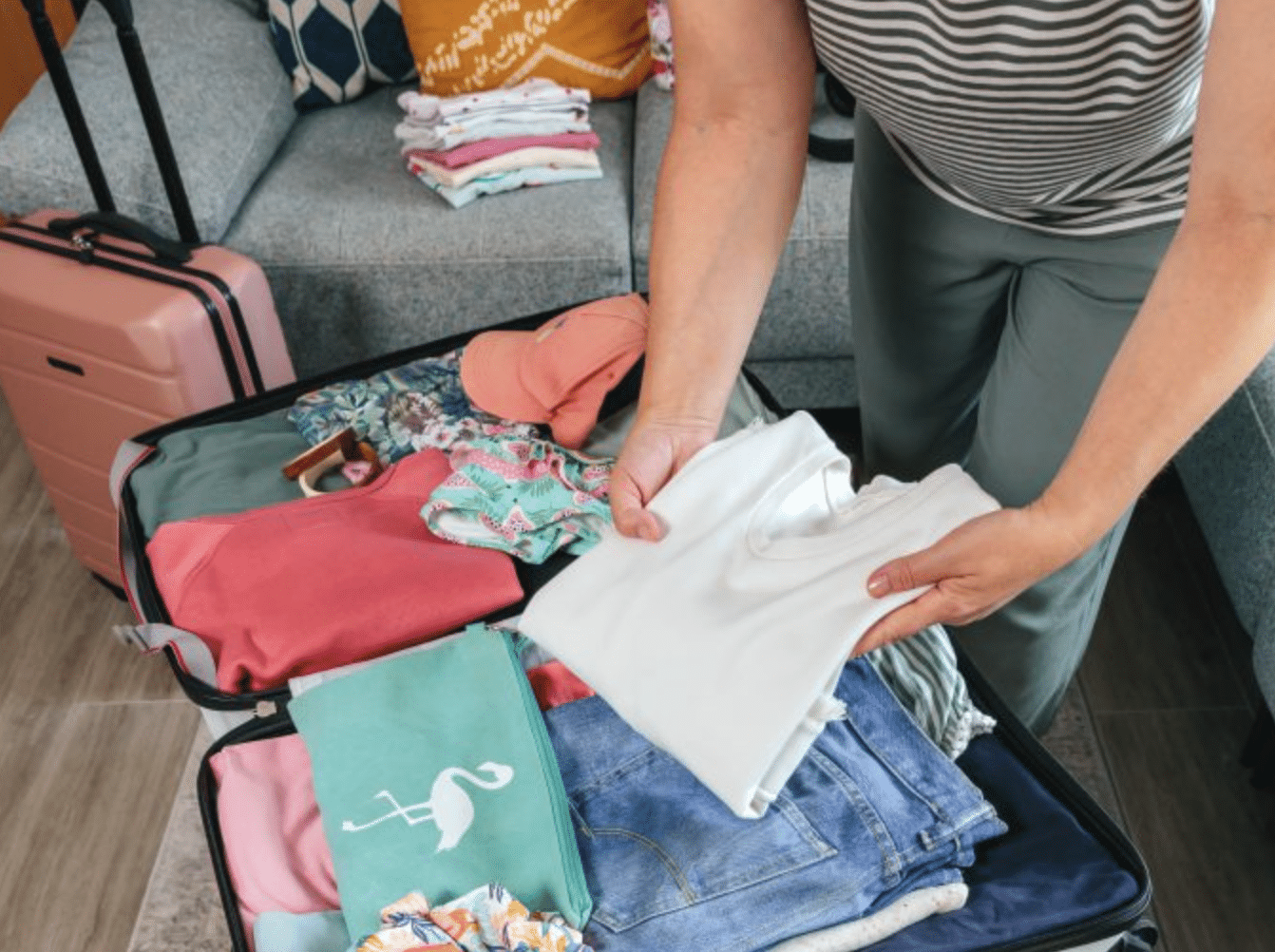
Simply folding clothes flat and stacking them tends to waste space and makes items harder to find compared to rolling or using packing cubes. This is a small technique change that has a real impact on both space efficiency and organization throughout the trip.
Rolling clothes, or investing in a set of packing cubes, makes a noticeable difference in both the amount of space used and how easy it is to find specific items later. This is one of the easier habits to adopt and one that pays off on every single trip afterward.
8. Packing Full-Size Toiletries for a Short Trip
Bringing full-size toiletry bottles for a trip of just a few days wastes suitcase space and adds unnecessary weight, especially when travel-size versions or hotel-provided toiletries would cover the same need. This is a small mistake, but it’s a consistently repeated one.
Use travel-size containers or purchase small versions specifically for trips, reserving full-size bottles for home use only. This frees up meaningful space in a smaller bag, particularly for shorter trips.
7. Not Confirming Your Destination’s Dress Code Expectations
Certain destinations, particularly some religious or cultural sites, have specific dress code expectations that aren’t always obvious from general research. Arriving unprepared can mean being denied entry or scrambling to find appropriate clothing while already at the destination.
Research any specific dress code expectations for planned activities or sites before the trip, and pack accordingly. This is a small research step that prevents a disappointing situation if it’s missed.
6. Packing Items You’ve Never Actually Used Before
Bringing brand-new gear or products on a trip without testing them beforehand risks discovering a problem, an uncomfortable shoe, a malfunctioning gadget, in the middle of your trip rather than at home where it’s easier to address. This applies to everything from new shoes to new electronics.
Test anything new well before the trip, giving yourself time to exchange or replace it if there’s a problem. This single habit has saved me from more than one uncomfortable travel day over the years.
5. Not Accounting for Laundry Access
Packing for every single day of a longer trip, rather than planning around laundry access partway through, results in an unnecessarily large and heavy bag. Many hotels, rentals, and even some hostels offer laundry access that can a fair amount reduce how much you actually need to pack.
Research laundry options at your destination for trips longer than about a week, and pack accordingly rather than defaulting to a full outfit for every single day. This is one of the more overlooked ways to a fair bit reduce luggage size on longer trips.
4. Forgetting to Pack a Basic Travel Document Organizer
Loose important documents, passports, boarding passes, insurance information, scattered throughout a bag or personal item lead to stressful searching at exactly the moments when you need quick, calm access to them. A simple organizer solves this completely.
Keep all essential travel documents in a single, dedicated pouch or organizer that stays in the same spot throughout the trip. This small habit removes a surprising amount of low-level travel stress.
3. Packing Based on What You Wish You’d Wear, Not What You Actually Wear
It’s easy to pack aspirationally, imagining a version of the trip where you dress up more than you realistically will, and end up carrying clothing that never gets worn. This is a subtler version of overpacking that’s worth being honest with yourself about.
Think realistically about your actual daily habits and planned activities rather than an idealized version of the trip. This kind of honest self-assessment tends to result in a noticeably lighter, more practical suitcase.
2. Not Double-Checking Airline-Specific Carry-On Size Rules
Carry-on size limits vary between airlines, and assuming a bag that fit fine on a previous airline will also fit on a different one can result in a surprise gate-check fee. This is especially relevant when flying with budget carriers, which sometimes have stricter size requirements than major airlines.
Check the specific airline’s current carry-on dimensions before the trip, even if you’ve flown with a similar bag before. Airline policies do change over time, and it’s worth a quick confirmation rather than assuming.
1. Waiting Until the Last Minute to Pack
Packing the night before, or worse, the morning of departure, leads to rushed decisions, forgotten items, and unnecessary stress that has nothing to do with the actual travel itself. This is probably the most common mistake on this entire list, and also one of the easiest to fix.
Start packing a few days ahead, even if it’s just laying items out or making a list, rather than compressing the entire process into a single rushed session. This single change has done more for my own pre-trip stress levels than almost anything else on this list.