How to Signal for Help When You’re Lost or Stranded
I think a lot of survival content focuses heavily on the skills that keep you alive day to day, fire, water, shelter, and spends comparatively little time on the skill that actually ends the situation, being found. Signaling effectively is arguably one of the most important skills in any genuine emergency, since even perfect self-sufficiency doesn’t resolve a situation the way an actual rescue does.
This guide covers the core signaling methods worth knowing, along with the reasoning behind why each one works, so you’re not trying to remember a checklist under pressure but actually understand the underlying principles.

Why Signaling Deserves More Attention Than It Usually Gets
Search and rescue operations depend heavily on visibility, whether that’s visual, auditory, or electronic. A person who’s easy to spot from the air or from a distance gets found faster than someone who’s technically surviving well but effectively invisible to searchers. This is part of why I’d argue signaling knowledge deserves a spot alongside the more commonly discussed items in any survival kit, not as an afterthought but as a core category in its own right.
Understanding this shifts the priority in a genuine emergency, sometimes the most valuable use of your time and energy is making yourself more visible and detectable, not continuing to move or problem-solve in isolation.
The International Distress Signal
There’s a widely recognized signal pattern worth knowing, three of anything, three whistle blasts, three fires in a triangle, three flashes of a light, three shouts. This pattern is internationally recognized specifically because it’s distinct from the kind of random, single or double signals that occur naturally in a wilderness environment, making it easy to identify as an intentional call for help.
Knowing this pattern before you’d need it means you’re not trying to invent an effective signal under stress, you’re executing something you already understand. This is the same principle behind practicing any skill in low-stakes conditions well before relying on it, a theme that runs through most of what I’ve written about actual survival myths and the gap between owning knowledge in theory and being able to apply it under pressure.
Whistle Signals
A whistle carries much further than a shouting voice and requires far less energy to use repeatedly over an extended period, which matters if you’re signaling for a while before help arrives. Three sharp blasts, paused, repeated, is the standard distress pattern, and a whistle is one of the lightest, cheapest, most effective pieces of signaling gear available.
I keep a whistle attached directly to any pack I’m carrying, not buried inside it, specifically so it’s accessible without digging through gear in a moment when quick access actually matters. This kind of accessible placement matters more than the specific whistle model, a basic whistle within easy reach beats an expensive one buried at the bottom of a bag.
Visual Ground-to-Air Signals
If there’s a realistic chance of an aerial search, ground-to-air signals become genuinely valuable, and there’s a standardized set of symbols recognized by search and rescue teams. A large “X” made from rocks, branches, or any high-contrast material signals “need medical assistance,” while a large “V” signals “need assistance” more generally.
These symbols need to be large enough and high-contrast enough to actually be visible from the air, which usually means a fair bit bigger than people initially expect, ideally at least ten feet across, placed in an open area rather than under tree cover. Building one of these early, before you’re exhausted or dealing with fading daylight, is worth doing if you anticipate needing rescue.
Signal Mirrors and Reflective Surfaces
A signal mirror can be seen from a genuinely impressive distance under the right conditions, sometimes many miles, making it one of the more effective long-range visual signaling tools available. Using one effectively takes a bit of practice, aiming a reflected beam of sunlight accurately at a specific target, whether that’s a search aircraft or a distant road, isn’t automatically intuitive the first time.
Practice with a signal mirror on a clear day before you’d need it in an actual emergency, aiming at a fixed target like a distant tree or building to get a feel for how the aim actually works. This is a skill that benefits enormously from a few minutes of practice, since fumbling with an unfamiliar tool during an actual emergency wastes valuable time and energy.
Fire as a Signal, Not Just for Warmth
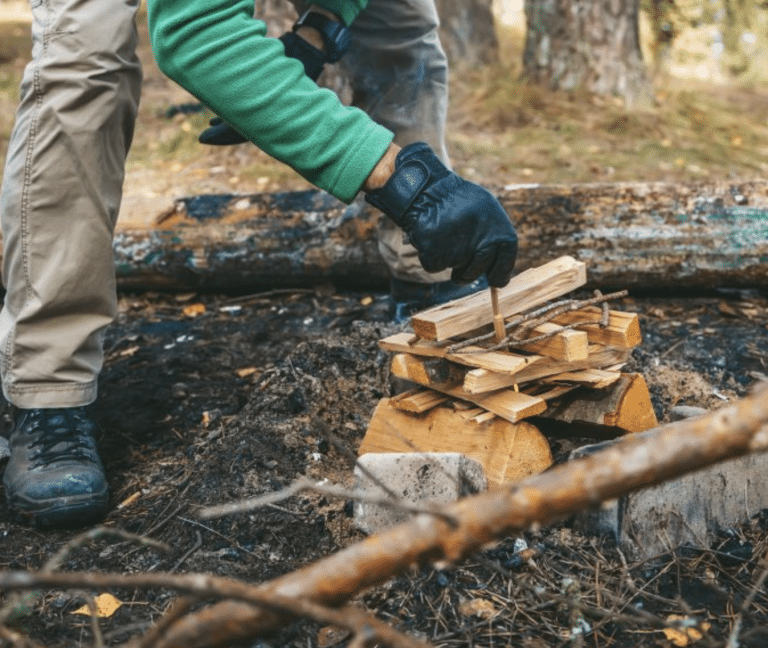
Beyond its more commonly discussed uses for warmth and cooking, fire is a actually effective signaling tool, particularly at night when a fire is visible from a significant distance, or during the day when adding green vegetation to a fire creates thick, visible smoke. Three fires arranged in a triangle is a recognized distress pattern specifically because it’s distinct from the kind of single fire a camper or hiker might have for ordinary purposes.
This connects directly to the fire-starting skills I’ve touched on elsewhere, since a signal fire only works if you’re actually capable of starting and maintaining one reliably, which is exactly why practicing fire starting in low-stakes conditions matters so much, the same idea I lean on throughout my post on reading nature’s warning signs correctly before conditions turn against you.
Electronic Signaling Options
Beyond traditional methods, personal locator beacons and satellite messengers have become increasingly accessible and offer a reliable way to signal for help even far outside cell coverage. These devices transmit a distress signal, sometimes with your exact GPS coordinates, directly to search and rescue coordination systems, which can dramatically reduce search time compared to a rescue team searching a broad area based on a last known general location.
If you spend regular time in remote areas without reliable cell coverage, I’d actually consider this a worthwhile investment, similar in spirit to the reasoning behind other gear worth spending more on, since the value of a fast, accurate rescue signal is hard to overstate in a genuine emergency.
Staying Put Versus Signaling While Moving
A recurring theme in effective search and rescue is that staying in one place, once you’re aware you’re lost, generally improves your odds of being found compared to continuing to move unpredictably. This connects to signaling directly, since a stationary signal, a fire, a marked ground signal, is far easier for searchers to locate than trying to track a moving person’s inconsistent path.
If you’ve followed basic safety practice and told someone your general plans before heading out, which I’d consider one of the more important habits covered across my writing on hiking preparation, staying put and focusing energy on effective signaling tends to be the better strategy than continuing to search for a way out on your own.
Final Thoughts
Signaling effectively is a skill that deserves real attention alongside the more commonly emphasized survival basics, and it’s one that benefits enormously from practice before you’d ever need it under actual pressure. A whistle within easy reach, a basic understanding of ground-to-air symbols, some practice with a signal mirror, and knowledge of the standard three-signal distress pattern cover most of what a typical outdoor traveler would realistically need.
If you take one thing from this guide, I’d suggest it’s this: being found is often a more achievable and more valuable goal in an emergency than trying to solve your way out entirely on your own. Prioritizing visibility and signaling, rather than treating it as an afterthought, can meaningfully shorten how long a bad situation actually lasts.